
The WhatsApp Graveyard: How Restaurants Lose Orders to Unanswered Messages
DewByte Technologies
Restaurant AI & Automation
The Orders That Vanish Without a Trace
It is 10:47pm. Service ended forty minutes ago. The kitchen is quiet. Your team went home.
And then a message arrives on the restaurant WhatsApp.
"Hi, are you open tomorrow? Can I book a table for 8 people at 1pm? Also, do you cater for large events?"
Nobody sees it tonight. In the morning, it is buried under six other messages. By the time someone reads it — if they read it — the customer has already booked somewhere else.
No alert. No missed order notification. No entry in a lost revenue report. Just silence.
This is not a rare event in most restaurants. It happens every shift, every evening, every weekend — quietly, invisibly, and at a cost that most restaurant owners have never actually calculated.
The Hidden Architecture of a Missed Message
WhatsApp became the default communication channel for restaurant customers across Turkey, Pakistan, the UAE, and dozens of other markets because it is where people already live. It is faster than calling. More comfortable than a booking form. More personal than an email.
But that convenience cuts both ways.
When customers message on WhatsApp, they expect a reply within minutes — not hours. Research consistently shows that response time is one of the top three factors determining whether an inquiry converts to a booking or an order. A customer who messages two restaurants and gets a reply from one within five minutes will book with that restaurant. The other restaurant never knew they were competing.
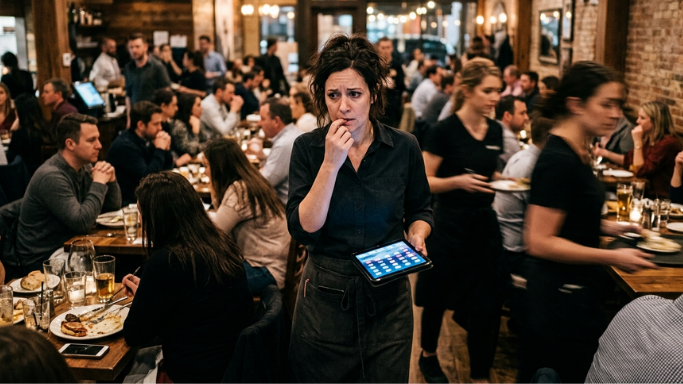
Most restaurant WhatsApp channels are managed by whoever is least busy — a front-of-house team member during a quiet period, a manager between calls, or the owner themselves when they happen to check their phone. When the restaurant is at its busiest — weekend evenings, lunchtime rushes, event nights — the WhatsApp inbox goes dark. That is precisely when the most valuable messages arrive.
What a Single Missed Message Is Actually Worth
Let us run the numbers. Not to make a theoretical point — to make the invisible visible.
Say your restaurant receives 25 WhatsApp messages on a typical day. These come in across three windows: morning (opening enquiries), lunchtime (same-day bookings, quick order questions), and evening (after-service messages from customers planning ahead). Your team responds reliably during the morning window. Response rates drop at lunchtime. After 9pm, nobody is watching the inbox.
Of those 25 messages, restaurants we have spoken to typically report that 8 to 12 arrive outside staffed response windows. Not all of them are orders — some are general enquiries, some are complaints, some are suppliers. But conservatively, 4 to 6 of those messages represent genuine booking or order intent.
If your average booking or order value is $35 — and for a table reservation for two people with drinks, that is modest — missing 5 revenue-intent messages per day looks like this:
- 5 missed messages × $35 average order value = $175 per day
- $175 × 30 days = $5,250 per month
- $5,250 × 12 months = $63,000 per year
That is the conservative version. If your average booking covers a table of four, the number climbs much faster.
And that is only counting missed orders. It does not count the damage to reputation from customers who messaged and felt ignored. It does not count the reviews they did not leave — or the ones they did.
Why This Problem Gets Worse as the Restaurant Gets Better
Here is the part nobody talks about: the WhatsApp problem scales with success.
A restaurant doing moderate volume might receive 15 messages per day. A popular restaurant doing strong weekend numbers might receive 60. The manual workload does not grow linearly with revenue — it grows faster. And unlike kitchen capacity, which you can physically expand, your team's ability to manage inbound messages is capped at the number of people who have access to the phone and the time to reply.
The restaurants that grow quickest are often the ones most exposed to this problem. More customers means more messages. More messages means more gaps in coverage. More gaps means more missed orders — at the exact moment the business should be converting the most.
This is the WhatsApp Graveyard: the place where orders arrive after hours, during peak shifts, and across busy weekends — and disappear without a trace because nobody was there to answer.
The Three Scenarios Where Restaurants Lose the Most
Across the restaurants we have spoken to, the missed message problem concentrates in three recurring scenarios.
Scenario 1 — After-Service Messages
Customers do not plan restaurant visits during business hours. They decide at 10pm on a Tuesday when they are scrolling their phone. They message then. Your team finished an hour ago. By morning, that customer has either forgotten, found another option, or both.
Scenario 2 — Peak Rush Overflow
Friday evening at 7:30pm. The floor is full, the kitchen is firing, every team member is occupied. WhatsApp messages come in. Nobody picks up the phone. The irony: the messages most likely to convert — from customers actively looking to book right now — are the ones most likely to go unanswered.
Scenario 3 — Group and Event Enquiries
A customer messages asking about availability for a birthday dinner for twelve. This is not a $35 order — it is a $400 booking. It requires a quick conversation: availability, menu options, deposit. If that conversation does not start within thirty minutes, the customer moves on to the next restaurant on their list. High-value enquiries are the most sensitive to response time, and they are the ones most often missed.
What the Restaurant Owner Experiences
The most disorienting part of the WhatsApp Graveyard is that the restaurant owner never feels it directly.
There is no alert that says: "You missed 6 orders last night worth $210." Revenue from missed customers simply does not appear. You cannot track a sale that never happened. The P&L looks normal. The week closes. The pattern repeats.
What owners do feel — and what they consistently describe — is a low-level anxiety about whether they are missing something. A sense that they should be checking the phone more. A habit of picking up WhatsApp at 11pm to scan through messages they do not have the energy to reply to properly.
That is not a workflow. That is a system designed to burn out its owner.
Why More Staff Is Not the Answer
The instinct is to assign WhatsApp to someone specific. Give one person the phone. Make them responsible for replies.
In practice, this creates new problems without solving the original one. The person assigned is unavailable during the peak windows when coverage matters most. They get pulled to the floor. They go home. They have a day off. And the inbox goes dark again.
You cannot staff 24-hour WhatsApp coverage with a restaurant team built for in-service operations. The hours do not align. The cost does not make sense. And the human variability — one person replying quickly and warmly, another replying hours later with two words — creates an inconsistent customer experience that damages the brand.
The restaurants solving this problem are not hiring more staff. They are deploying AI agents that handle WhatsApp inbound around the clock — answering booking enquiries, capturing order intent, confirming availability, and escalating to a human only when a conversation genuinely requires one.
What a WhatsApp AI Agent Actually Does
A WhatsApp AI agent built for a restaurant is not a generic chatbot. It is trained on your menu, your hours, your booking flow, your common customer questions, and your tone of voice. When a message arrives at 10:47pm asking about a table for eight, it does not send an auto-reply that says "Thanks for your message, we will get back to you." It handles the conversation:
- Confirms availability for the requested date and time
- Asks for the name and contact number
- Captures the booking and confirms it back to the customer
- Answers any follow-up questions about the menu or deposit
- Logs the booking for your team to see in the morning
The customer gets what they needed within seconds. The booking is captured. Your team walks in the next morning to a reservation already on the books — from a message that arrived forty minutes after close.
That customer did not go to the graveyard. They converted.
The Number You Cannot Unsee
Go back to the calculation at the top of this post. Take your own numbers: how many WhatsApp messages arrive outside your staffed response window each day? What is your average booking or order value? Multiply it out.
For most restaurants, the monthly number sits somewhere between $3,000 and $8,000 in missed revenue. For busy operations in peak season, it climbs higher. This is not revenue that was lost to a competitor with better food or lower prices. It was lost to silence. To an inbox that nobody checked at the right moment.
The fix is not complicated. But it requires a decision: to stop treating an unanswered WhatsApp as an unfortunate accident and start treating it as an operational failure with a real cost attached.
Stop Losing Orders to the Graveyard
DewByte Technologies builds done-for-you WhatsApp AI agents for restaurants — trained on your menu and booking flow, live in 30 days, handling inbound messages around the clock so your team does not have to.
Your business should run without you running it manually.
Book Your Free Roadmap Call with DewByte →
We will map your current WhatsApp workflow, calculate what missed messages are costing your restaurant, and show you exactly what an AI agent looks like in your operation.
DewByte Technologies builds done-for-you AI agents and automation systems for restaurants and e-commerce brands — roadmap to live system in 30 days.
Tags